

Construction Engineering
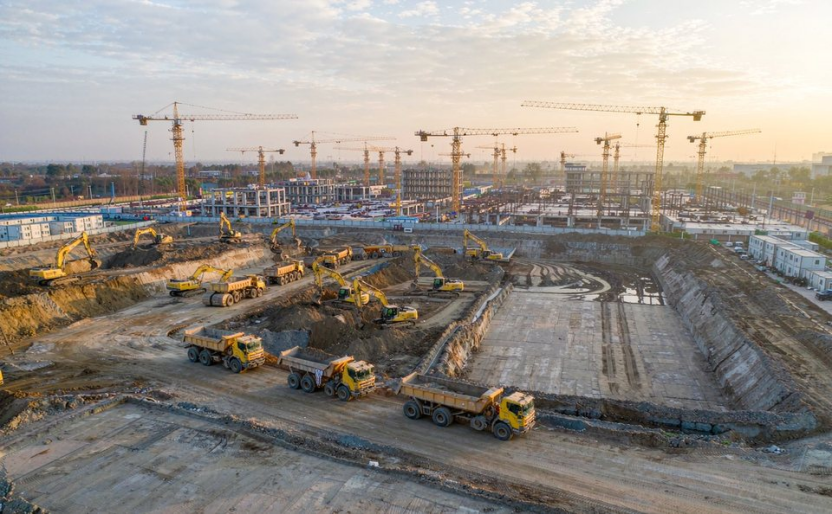
Construction is defined by its temporary nature: a project has a fixed schedule, equipment mobilizes and demobilizes by phase, and the project office is set up and disbanded with the project. Equipment ownership is mixed, and cost must be allocated across projects and work sections.
Operating Characteristics
Equipment comes from three sources: owned, rented and subcontractor-supplied. Charging is by machine-shift, by trip or by volume. Settlement cycles are tied to project milestones. A single group often runs projects in several cities at once, which makes a consistent management standard hard to maintain.
Management Pain Points
Pain Point | How It Appears | What It Costs |
Rental shift disputes | Hours for rented equipment are recorded separately by owner and hirer, then reconciled at demobilization | Frequent disputes that delay settlement and strain relationships |
Centrally supplied diesel is hard to control | The project supplies fuel centrally; how subcontractors actually use it cannot be verified | Fuel diversion and resale; project fuel cost out of control |
Idle and overloaded capacity at once | Without visibility of real utilization, some sections idle while others hire in | Duplicate rental; plant cost overrun |
Progress claims lack evidence | Reported completion has no equipment-side data to support it | Distorted progress reporting; schedule risk detected too late |
Projects cannot be compared | Each project uses its own reporting conventions | No group-level benchmarking; appraisal lacks a basis |
Solution Configuration
Equipment Type | Configuration | Installation Notes |
Excavator / Wheel loader | W12 + S16 | Split-design mounting; removable and transferable at project close without damaging the machine |
Dump truck / muck truck | W12 + S16 + Trip Counter | Trip counter bound to excavation and spoil-ground geo-fences |
Road roller / Paver | W12 | Records compaction time for shift calculation |
Rented equipment | W12 (removable) | Billing starts and stops at mobilization and demobilization, providing the rental settlement basis |
Key design point — the drill-free, removable mounting lets one terminal travel with the machine from project to project. The platform keeps accounts by project, so cost is allocated to the correct work section automatically.
Results Achieved
Original Pain Point | Product Capability | Result |
Rental shift disputes | An independent third-party working-hour record acceptable to both sides | One settlement basis; reconciliation cycle markedly shorter |
Central diesel out of control | Refuelling and consumption recorded by machine and by project | Drawn volume can be checked against output; abnormal losses traceable |
Idle alongside overload | Platform shows utilization and attendance rate per work section | Internal redeployment takes priority over external hire; plant cost falls |
Progress lacks evidence | Shift hours linked to completion volume | Progress assessment gains objective support |
Projects not comparable | Group-level view with consistent definitions and hierarchical access | Head office can benchmark every active project |
Management Value
Cost reduction — plant cost is a significant share of civil works. Cutting duplicate hire, compressing idle time and controlling fuel diversion produce substantial savings, and the hidden cost of fewer settlement disputes is equally real.
Efficiency gains — the project office no longer needs a dedicated person to compile shift ledgers; daily reports are generated automatically. Machine transfer decisions move from judgement calls to utilization data.
Ease of management — three access tiers (group, branch, project office) each see only their own scope, while head office can benchmark all active projects in one view.


