


Municipal Sanitation
Sanitation is where the company has the deepest delivery record, covering the full chain of road sweeping, dust suppression and waste transfer. Vehicles work fixed routes, work quality is subject to performance appraisal, and funding comes from the public budget
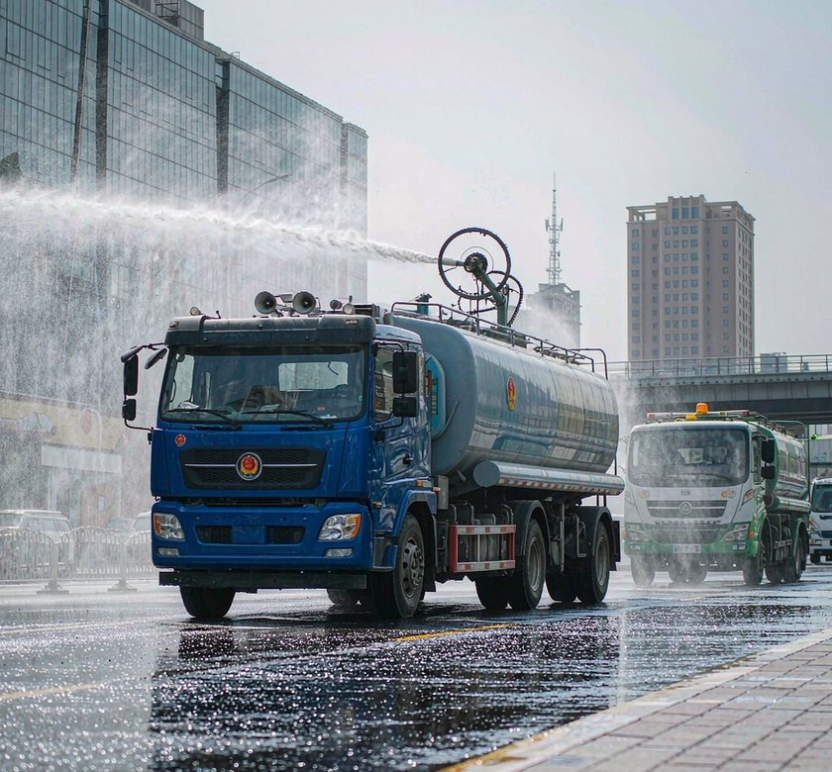
Operating Characteristics
Routes are fixed and work frequency is high. The fleet mix is concentrated: road sweepers, water spray trucks, waste transfer trucks and high-pressure washing trucks. Appraisal indicators are explicit — coverage, working hours and fuel consumption all count — and labour is a large share of cost.
Management Pain Points
Pain Point | How It Appears | What It Costs |
Difficulty recruiting, ageing workforce | Front-line sweepers are hard to recruit and harder to retain | Rising labour cost and an unstable workforce |
Dispatch by telephone | Vehicle positions are tracked by people chasing vehicles; dispatch depends on experience | Slow response; incidents such as sudden spills handled late |
Fuel leakage everywhere | Fuel consumption is not monitored precisely | Theft and inflated expense claims persist |
Unfair appraisal | Work quality is uneven and route deviations cannot be traced | No objective standard; good and poor performance treated alike |
Crude trip settlement | Waste transfer is billed per trip using paper tickets | False trip claims; insufficient settlement evidence |
Solution Configuration
Vehicle Type | Configuration | Installation Notes |
Road sweeper | W12 + S16 | Mounted on the vehicle exterior; separates sweeping work from transit driving |
Water spray / dust suppression truck | W12 + S16 | Records spraying duration and water-refill frequency |
Waste transfer truck | W12 + S16 + Trip Counter | Trip counter bound to collection stations and transfer stations |
High-pressure washing truck | W12 + S16 | Shift and fuel calculated from working duration |
Results Achieved
Original Pain Point | Product Capability | Result |
High labour cost | Automatic reporting replaces manual ledgers | Ledgers that took days are produced in minutes |
Dispatch by telephone | Live position and working status with geo-fence dispatch | Dispatch response shortened from hours to minutes |
Fuel leakage | Three alert types: refuelling, consumption and abnormal drop | Fuel cost reduced by 15%–25% |
No appraisal standard | Working hours, coverage and fuel generated automatically | Appraisal fully data-driven and evidence-based |
Crude trip settlement | Automatic geo-fence counting with replayable routes | Trip settlement evidenced; false claims impossible |
Delivered reference project — for Indonesia's Julong Group: 200 working-hour terminals plus 200 fuel-level monitors, working-hour accuracy above 95%, fuel waste reduced by 25%, delivered with a Chinese–Indonesian bilingual platform, WhatsApp alerts and Google Maps. Products now operate in Indonesia, Southeast Asia, the Middle East and Africa.
Management Value
Cost reduction — for a sanitation fleet of around 50 vehicles, operating cost falls by approximately 30%, with annual fuel and labour savings of roughly RMB 400,000–600,000 and payback within 6–12 months. Actual results depend on fleet size, work intensity and the starting level of management.
Efficiency gains — management efficiency improves by more than 50%, empty-running drops by 22%, and dispatch response enters the range of minutes.
Ease of management — hierarchical access for fleet, project and company with data isolation; daily and monthly reports generated automatically; appraisal and settlement data exported in one step, ready to connect to finance and municipal platforms.


