


Power Engineering Construction
Equipment management in power engineering has two distinctive features. First, temporary power depends on diesel generation, making generator fuel a direct project cost. Second, equipment is highly dispersed — a single transmission and substation project often stretches across tens of kilometres.
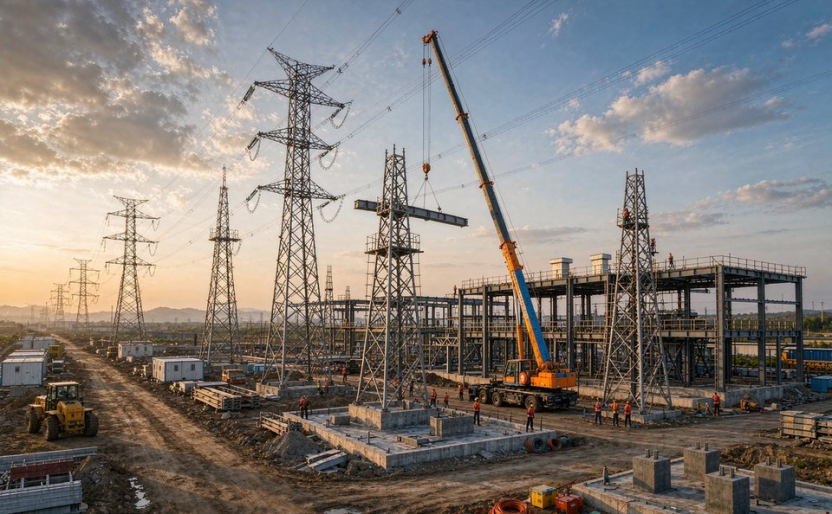
Operating Characteristics
Work faces for tower foundations, tower erection and line stringing are far apart. Temporary power comes from diesel generator sets. Lifting equipment is billed by machine-shift. Schedule milestones are rigid and equipment is redeployed frequently. Cost must be allocated and reported by work section and by work type.
Management Pain Points
Pain Point | How It Appears | What It Costs |
Generator fuel out of control | Temporary power comes from diesel gensets; how much fuel is added, how much power is generated and where it is used are unrecorded | Inflated diesel cost that cannot be allocated across work sections |
Dispersed equipment hard to inspect | Work faces lie tens of kilometres apart; managers drive site to site to check status | Limited management reach; anomalies found late |
Lifting shift calculation | Truck and crawler cranes bill by shift, yet actual working time is unrecorded | Shift charges do not match actual work |
Dispatch under schedule pressure | Stringing and tower erection milestones are tight; equipment moves between faces by phone | Machines stand idle; schedule risk accumulates |
Project cost allocation | Plant and fuel cost must be allocated and reported by work section and work type | Manual compilation with inconsistent conventions and frequent errors |
Solution Configuration
Equipment Type | Configuration | Installation Notes |
Diesel generator set | S16 (or fuel rod / ultrasonic) + W12 | Method selected by genset tank structure; running hours and generation fuel recorded together |
Truck crane / Crawler crane | W12 | Records actual lifting time as the shift basis |
Concrete equipment / pump truck | W12 + S16 | Records working hours and fuel to calculate cost per cubic metre |
Earthworks and haulage equipment | W12 + S16 + Trip Counter | Same configuration as the construction scenario |
Key design point — generator sets are recorded on two dimensions, running hours and fuel, so fuel per unit of generation can be calculated directly. This reveals whether a set's efficiency is degrading or whether consumption has become abnormal.
Results Achieved
Original Pain Point | Product Capability | Result |
Generator fuel out of control | Real-time fuel level plus running hours, recorded together | Fuel per unit of generation calculable; abnormal consumption alerts immediately |
Dispersed equipment hard to inspect | Platform map shows position and status of all equipment | Managers stop driving face to face; anomalies are pushed to them |
Lifting shift calculation | W12 records actual working time | Shift charges match actual work |
Dispatch under schedule pressure | Geo-fences plus live status | Nearest-available redeployment has a basis; idle waiting falls |
Cost allocation | Automatic roll-up by project, work section and equipment type | Plant and fuel cost feed the cost report directly |
Management Value
Cost reduction — diesel generation is the most easily overlooked cost hub on a power site; once consumption is digitized, the savings are usually obvious. Billing lifting shifts on actual working time also avoids the "charged from arrival" dispute.
Efficiency gains — management reach extends from "the faces one can physically drive to" to "every machine the platform covers", so the same team supervises a far larger worksite.
Ease of management — three views for project office, branch and head office, with plant and fuel cost allocated automatically by work section. Cost analysis no longer depends on manual ledgers.


